In every Webb classroom, there is an invisible force that quietly rules the environment. Whether evil or innocuous, it rests at the helm of discussions, projects, and even lesson plans.
This force is known as nothing other than artificial intelligence.
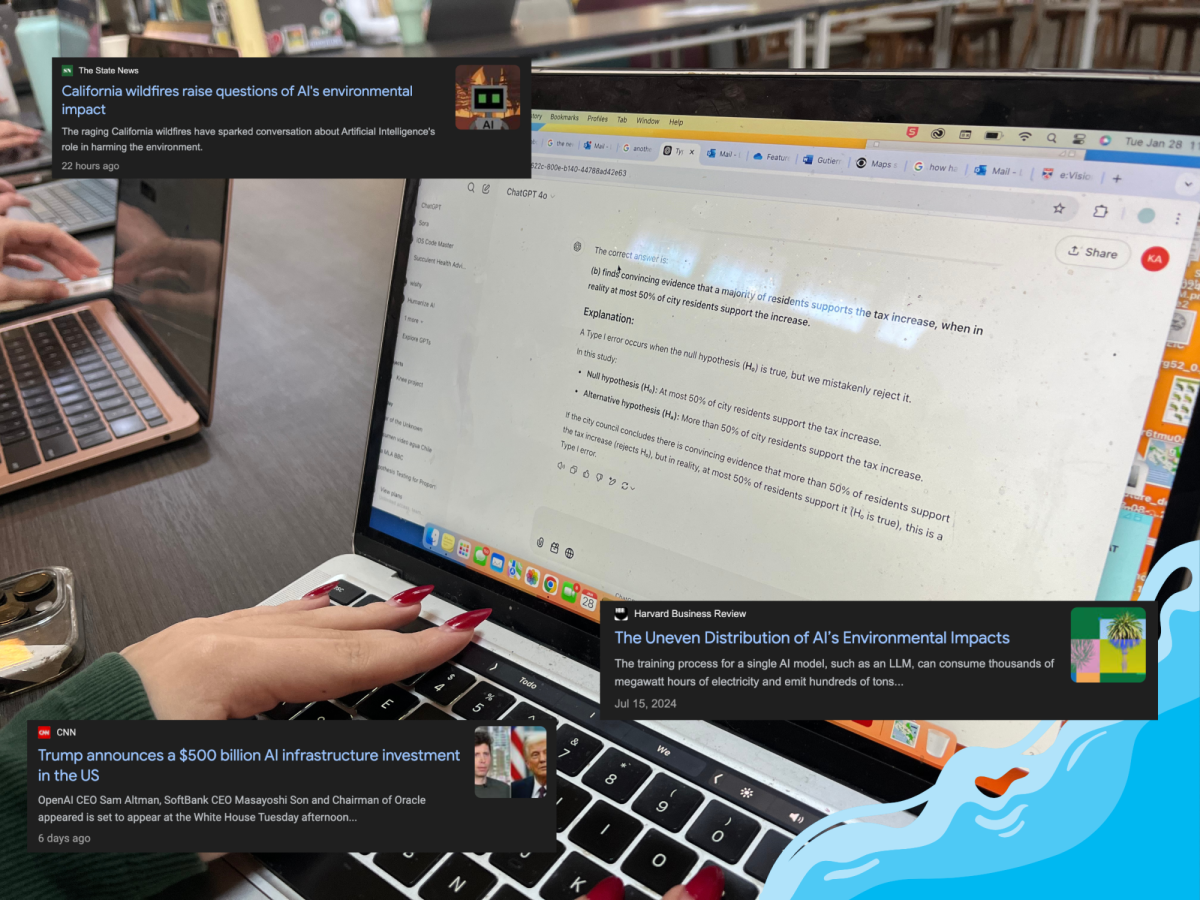
Since the emergence of ChatGPT in 2022, AI has become a backbone for students worldwide. Essays that were once outlined and edited by students are now being produced at the click of a button. Educational articles assigned for homework are now being summarized by chat bots. In just a short few years, AI has slithered its way into becoming the norm.
Artificial Intelligence has gone from being taboo to mainstream—and it’s here to stay.
But how do we navigate the world of AI? What does this mean for the future of education? Who do we turn to for these answers?
On October 13, Kevin Roose visited Webb students and faculty in an all-school assembly, sharing his insights, updates, and hopes for the future of Artificial Intelligence with the school. As a technology columnist for the New York Times, Roose has experience in Silicon Valley and the development of artificial general intelligence (AGI). Additionally, on his and Casey Newton’s podcast Hard Fork, Roose explores AI innovations and shortcomings.
Dr. Mark Dzula, Director of Teaching and Learning Resources, embraces the new reality. As a teacher for Technology and Innovation Seminar, librarian, and educator in Freshman Seminar, he looks towards a future that uses AI to achieve pedagogical goals.
“I think we have a wonderful opportunity as teachers to get to know what students need,” Dr. Dzula said.
With transparent AI usage, he believes teachers can gain insight as to how assignments affect students. What is their function? How do they provide meaning? Are they relevant?
But from a student perspective, transparency is not an option. Despite its prevalence in school communities, complete acceptance of the tool is relatively sparse. With the current lack of AI implementation, the fear of punishment for using such a powerful tool blocks students from being open.
Still, Dr. Dzula envisions a different world where students and educators can connect.,
“We have a great opportunity to learn from each other in a new way and essentially work together,” Dr. Dzula said. “It doesn’t have to be a combative relationship.” He wants students and teachers to be open with AI usage, using the tool to its fullest potential. Though, to Dr. Dzula, such a vision cannot be realized through blind usage.
“I think it’s worthwhile to be skeptical,” Dr. Dzula said. “No matter what tool you’re using, you don’t just use it for the sake of something that’s shiny and new.”
He cautions against using AI simply because we can. To him, it is something that needs to help us achieve meaningful societal goals, which cannot happen if we do not take the steps to educate society about its growing relevance.
The relationship between people and AI has two paths from here. We can contort it into a slop factory, producing endless, meaningless content, or we can guide towards productivity, revolutionizing our capacities for creating and working.
Whichever path the relationship takes, the results will have extensive effects on the future generation of working adults and students alike. After Roose’s talk, many Webb students left with more concerns than calmness.
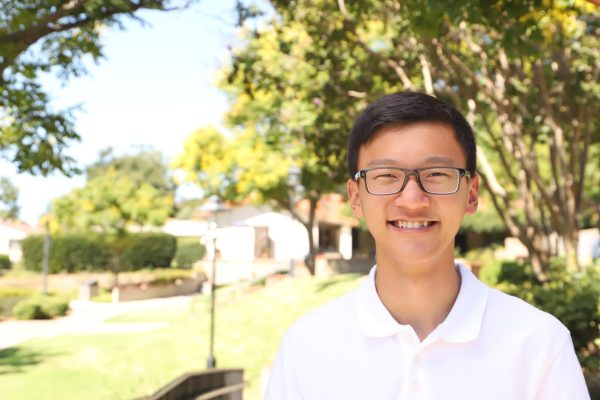
One Webb senior, Michael Albornoz (‘26), is interested in the ethics of AI and wants to pursue a major in data science. Michael believes AI won’t take over his future career, yet he questions Kevin Roose’s complacency with the environmental effects of AI usage.
“Generative AI uses a lot of water and causes a lot of the same amount of pollution that other data centers do,” he said. “but I feel like with [Kevin Roose], he was trying to brush that reality aside saying AI produces the same amount as all these other non-AI giant producers of pollution.”
Michael is worried not just about AI’s environmental impact, but also about how it could change Webb’s culture of unbounded thinking.
“It’s going to impact the way we think freely like Webb’s unbounded thinking,” Michael said. “I think it’s going to go away a little bit because of how much AI is going to assist in that.”
During his talk, Kevin Roose also introduced a metric of expressing one’s perceived probability of AI causing a catastrophic outcome for humanity— p(doom).
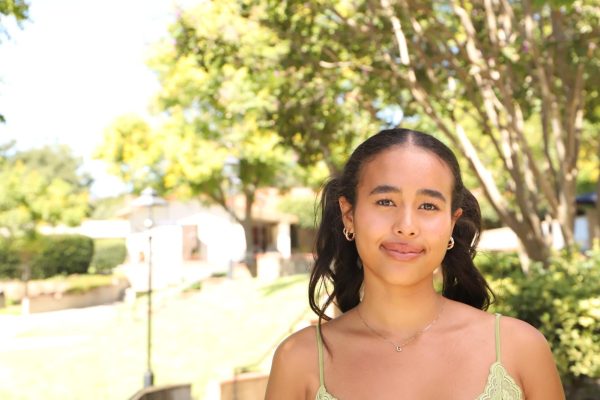
Roose shared that his personal p(doom) is around 5%, meaning that he believes there is a 1/20 chance of AI producing detrimental harm. Samantha Crawford (‘26), however, believes the probability of doom is much higher.
“[My p(doom) is] 60%. The fact that AI is becoming aware of itself and knowing that it exists and has power, that’s a little scary to think about,” she said.
Despite her fears for the future of AI, Roose’s talk prompted Samantha to question how Webb will continue to incorporate technological advancements into its community.
“[Roose] said that he thinks education is going to evolve into having days where you can use AI and then days where it’s going to be more traditional. I thought that was interesting, and I wonder if Webb is going to take that initiative here,” she said.
Despite both their hesitations to fully trust and accept AI, both Michael and Samantha are frequent users of the tool, employing platforms like ChatGPT to create outlines and study guides for their assignments.
Their reasoning for their AI usage? It’s easier.
“It’s easy to just search for a homework assignment and get the answer on AI,” Samantha said.
But this convenience comes with a cost, one that extends beyond individual homework shortcuts.
Kevin Roose’s discussion with the Webb community has prompted a major ethical dilemma for students: Do the pros of AI outweigh the cons? How do we know when it has surpassed the threshold of responsible use?
There are no clear answers, but students and faculty have been called on by Kevin Roose to examine their stance on the issue and recognize what it means to be human in the age of advanced technology.
In the end, AI won’t determine the future of education—people will.
Whether it becomes a shortcut or a tool for deeper learning, hinges on the decisions made in classrooms like Webb’s every day. Artificial intelligence is powerful, but so is the mind that chooses how to use it.


![All members of the Webb Robotics Winter season teams taking a group photo. Of note is Team 359, pictured in the middle row. “It was super exciting to get the win and have the chance to go to regionals [robotics competition]” Max Lan (‘25) said. From left to right: Max Lan (‘25), Jerry Hu (‘26), David Lui (‘25), Jake Hui (’25), Boyang Li (‘25), bottom Jonathan Li (’25), Tyler Liu (‘25)](https://webbcanyonchronicle.com/wp-content/uploads/2025/03/Screenshot-2025-03-10-at-2.41.38 PM.png)