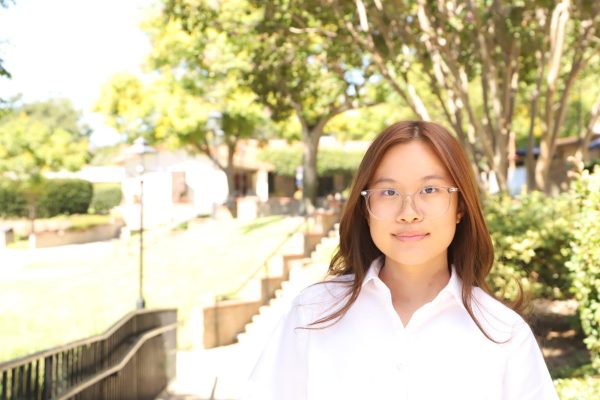
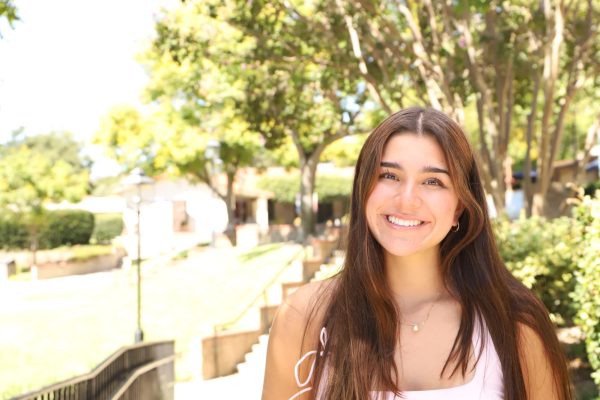
![The current staff of the Webb Canyon Chronicle gathers together, representing the students behind the publication. While the photo captures a single moment, it reflects the collaboration and effort that go into every stage of the publishing process. “I love [that everyone on the WCC team] is just so supportive,” said Sandy Li (‘27), “They make me feel like I can freely express my ideas without being judged.” This shared effort highlights how the Chronicle is not just about individual writing, but about a collective commitment to telling meaningful stories that connect the Webb community.](https://webbcanyonchronicle.com/wp-content/uploads/2026/04/IMG_4327-1-e1776372696972-1200x852.jpg)
Throughout their years at Webb, almost every Webb student has heard this phrase at least once:
“Read the Webb Canyon Chronicle!”
Whether it is on the dorm walls, at community dinners, or on an Instagram post and a STAS email, the Webb Canyon Chronicle (WCC) is impossible to miss. While most students see the final articles, not many know and understand the process behind every WCC article, published or not.
The group behind the publication is made up of students across three elective courses: Journalism, Honors Journalism, and Advanced Studies Modern Media. Beginning sophomore year, students can enroll and become part of a fully student-run newsroom, where they not just learn about journalism, but also practice it.
For many, the journalism experience starts with being a staff writer. And contrary to popular belief, journalism does not begin with writing, but rather with the exploration of ideas.
Each publishing cycle starts before anyone opens a document. Student journalists pitch potential stories, identify topics that are timely, relevant, and meaningful to the Webb community. These pitches are shared in a collaborative “pitch loop,” where editors provide feedback and help refine ideas.
Journalists at the Webb Canyon Chronicle also share their pitches in a mentorship group that rotates every cycle. There, they check in with head editors and undergo peer review to strengthen their pitches,
“Pitching can be intimidating at first,” said Alexandra Wang (‘27), a former journalism student. “But it’s also where you learn how to think about what actually matters to your audience.”
Once a pitch is approved, journalists begin developing the article’s angle. They outline the article’s purpose, identify stakeholders to interview, and plan the direction of the piece. The end of the ideation process is marked by the start of the reporting process—where they reach out for interviews and start shaping a narrative that reflects the community.
“The first interview was with an upperclassman from the WCC, and I was kind of scared,” said Anna Meng (‘27), the current Webb Canyon Chronicle social media manager. “But I enjoyed talking with her and learned a lot.”
Interviewing stakeholders is when the Chronicle becomes more than just a class. By talking to students, faculty, and staff, journalists are challenged to represent voices beyond their own, turning everyday campus experiences into stories that inform and connect the community.
After drafting, the article enters a multi-step editorial process. It moves through section editors, section chiefs, advisors, and copy editors, with each round focused on strengthening clarity, depth, and accuracy. Writers revise continuously, learning to adapt their work based on feedback.
“My favorite part of the publishing process is getting to read and edit people’s articles,” said Miranda Li (‘27), the current WCC editor of news. “Getting to know people’s perspectives and takes on different events is really interesting.”
The most rewarding part comes when the polished article completes the editing process and gets to the publishing editor. Yet, even after an article is published, the cycle doesn’t stop. Writers design social media plans, and soon after, their articles get promoted, and the next round of ideas begins.
“[The Instagram page] was actually my first time learning about the Webb Canyon Chronicle,” Katt Weyrich (‘28) said. “Before that, I’ve heard about [the WCC] but never really knew where to read or what’s on it.”
Beyond the structure and deadlines, being part of the Webb Canyon Chronicle offers something more lasting. Students develop critical thinking skills, learn how to ask meaningful questions, and take responsibility for informing their community.
In addition to these individual skills, as a journalist, students learn to work in a team. Each article is shaped through collaboration—moving between writers, editors, and advisors who all contribute feedback and perspective. This process pushes students to communicate effectively, stay open to revision, and support one another in producing the strongest possible work. As a result, the Chronicle functions not just as a class, but as a shared effort where each member plays a role in telling the stories of the Webb community.
“Being a new teacher here, thanks to [the WCC], I feel so much more informed about the community,” said Eric Strom, math department faculty member. “I also feel much more a part of the community because of it.”
For those considering joining, the Chronicle is more than an elective. It is an opportunity to be an advocate, a connector, and challenge yourself to meet new people.